A warehouse fire claim was denied due to an occupancy error—highlighting how a single decision during construction can completely change how insurance coverage applies.
In this real-world case, a warehouse built with non-combustible construction suffered a total fire loss. The insured had builder’s risk insurance in place, inspections were completed, and the building appeared ready. However, the claim was denied—not because coverage was missing, but because occupancy began before the policy allowed it.
This scenario reveals a critical issue in builder’s risk insurance and commercial property coverage: policies are not based on assumptions of readiness. They are governed by clearly defined triggers—especially occupancy conditions and certificates of occupancy.
Why Was the Warehouse Fire Claim Denied?
The warehouse fire claim was denied because occupancy began before the policy conditions allowed it.
Builder’s risk insurance typically covers structures during construction. Once a building becomes occupied—whether partially or fully—the risk profile changes. If this transition is not reported and underwritten, the policy may no longer apply.
In this case, early tenant use created an uninsured exposure, placing the loss outside the scope of coverage at the time of the fire.
What Happened in This Warehouse Fire Claim
This claim unfolded as a sequence of reasonable decisions that ultimately led to a denial.
The warehouse was intended for tenant occupancy, and a lease had already been secured. As construction progressed, inspections were successfully completed, and the building appeared ready for use.
However, the certificate of occupancy had not yet been issued due to municipal delays.
To avoid disruption, the insured allowed the tenant to move food products into the building early. At that moment, the property shifted from a construction site to a partially occupied warehouse, introducing a different risk profile.
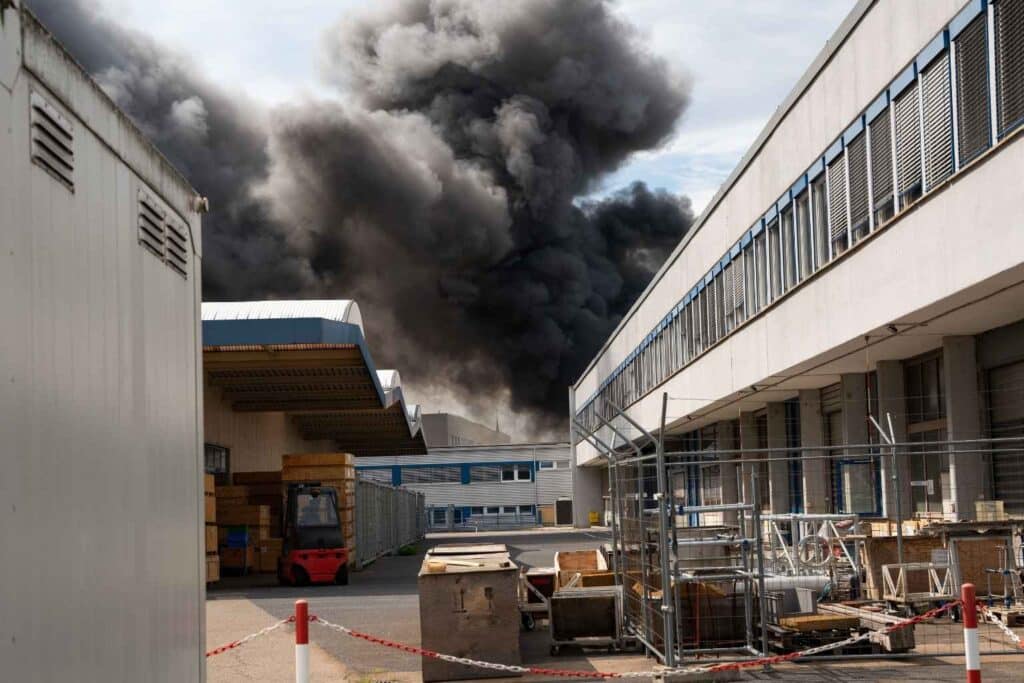
Shortly after occupancy began, a fire caused a total loss.
During the claims investigation, the adjuster reviewed:
- Tenant occupancy timeline
- Certificate of occupancy status
- Builder’s risk policy conditions
The key issue: occupancy occurred before coverage allowed it.
The claim was denied.
What the Agent Did Right
The agent followed proper procedures—and that made a critical difference.
During the underwriting process, the agent:
- Asked all required questions
- Documented the risk accurately
- Secured a signed application
This documentation established a clear record of the original risk.
When the claim was denied, the signed application protected the agent by showing:
- No misrepresentation occurred
- The insured changed the risk after policy issuance
This is a key principle in insurance risk management:
Documentation protects the agent—but communication prevents the problem.
However, this case also exposed a gap:
There was no structured process to capture mid-project changes in occupancy or use.
What Went Wrong With Early Tenant Occupancy in Builder’s Risk Insurance
The issue was not negligence—it was a failure to align real-world decisions with policy conditions.
From the insured’s perspective:
- Inspections were complete
- The building was operationally ready
- Delays were caused by the city
Allowing early occupancy felt reasonable.
But builder’s risk insurance does not operate on operational readiness—it operates on defined triggers like occupancy and use.
By allowing tenant goods into the building:
- The exposure changed materially
- The risk increased
- The policy conditions were no longer met
Because this change was not reported, the insurer evaluated the claim under the original policy terms, not the updated risk.
Result: no coverage at the time of loss.
Why Pre-Leases and Certificates of Occupancy Matter in Commercial Property Insurance
Two factors played a critical role in this claim:
Pre-Leases Signal Early Occupancy Risk
Pre-leases are common in commercial construction, but they create pressure for early tenant access.
Agents should anticipate:
- Early move-in requests
- Storage of goods before completion
- Operational use before approval
This is a predictable exposure, not an exception.
Certificates of Occupancy Define Coverage Transitions
A certificate of occupancy marks the official approval for building use.
In insurance terms, it often signals the transition from:
- Construction phase → Occupied building risk
Allowing occupancy before this point creates a coverage gap:
- The building is in use
- The policy still reflects construction
This misalignment is one of the most common causes of commercial property claim denials.
How Agents Can Prevent Builder’s Risk Claim Denials
Preventing claim denials requires proactive communication and structured processes.
- Clearly Explain Occupancy Clauses
Clients must understand:
- When coverage begins and ends
- How occupancy affects builder’s risk insurance
- What actions require policy updates
- Require Ongoing Risk Updates
Clients should report:
- Early tenant access
- Storage of inventory
- Changes in building use
- Strengthen Documentation Practices
Use:
- Signed applications
- Written acknowledgments
- Coverage condition summaries
- Implement Internal Checklists
Standardize:
- Pre-lease discussions
- Occupancy timing reviews
- Mid-project risk check-ins
- Treat Policies as Dynamic
Insurance policies must evolve as the project evolves.
Static policies lead to coverage gaps.
Key Takeaways From This Denied Insurance Claim
- Builder’s risk insurance changes when occupancy begins
- Early tenant use can invalidate or limit coverage
- Certificates of occupancy are critical coverage triggers
- Pre-leases increase the likelihood of early occupancy
- Documentation protects agents—but proactive communication prevents denials
A denied claim doesn’t start at the time of loss—it starts when a risk changes without being documented.
If you manage builder’s risk or commercial property insurance, occupancy-related exposure already exists in your book of business.
At Royalty Insurance, we help agencies and clients identify coverage gaps, improve documentation processes, and align policies with real-world risk.
Review your current policies and risk processes before the next claim happens.